Earth Wisdom for Everyday Living
For most of human history, daily life was naturally connected to the Earth. People knew when the seasons changed because those changes affected what they ate, what they planted, how they traveled, and how they spent their days. Sunlight influenced when they woke and rested. Weather mattered. Water sources mattered. The land beneath their feet mattered.
Modern life has given us extraordinary conveniences, but it has also made it possible to move through our days barely noticing the natural world at all.
Earth wisdom doesn't require giving up modern life. It's about bringing some of that awareness back—remembering that we are living beings within a living world and allowing that relationship to become part of everyday life again.
Here are some simple ways to begin.
Notice the Day Before Entering the Digital World
Before checking messages, news, or social media in the morning, take a moment to notice the actual world around you. Is it sunny? Cloudy? Windy? Cool? Has it rained overnight? Notice the quality of the morning light. Listen for birds. Step outside for a minute if you can.
It's a tiny shift, but instead of beginning your day immediately inside the digital world, you begin it by remembering where you physically are.
Let Natural Light Become Part of Your Rhythm
Our lives tend to revolve around clocks, but the Earth offers another rhythm through changing light.
Notice sunrise and sunset. Open curtains in the morning. Step outside when the late-afternoon light begins to change. Occasionally turn off some of the artificial lights in the evening and let your environment become a little darker as night arrives.
You don't have to organize your entire schedule around the Sun to become more aware of its rhythm. Simply noticing it reconnects you with something ancient that your body already knows.
Know What Grows Around You
How many plants, trees, flowers, birds, or insects in your neighborhood can you name? Many of us can recognize hundreds of corporate logos but only a handful of the living species around us.
Choose one thing that catches your attention and learn about it. What is that tree outside your window? What flowers grow naturally in your area? Which birds are making those sounds every morning? What foods are grown locally?
The more we know the living world around us, the less anonymous it becomes.
Bring the Earth Into Your Home
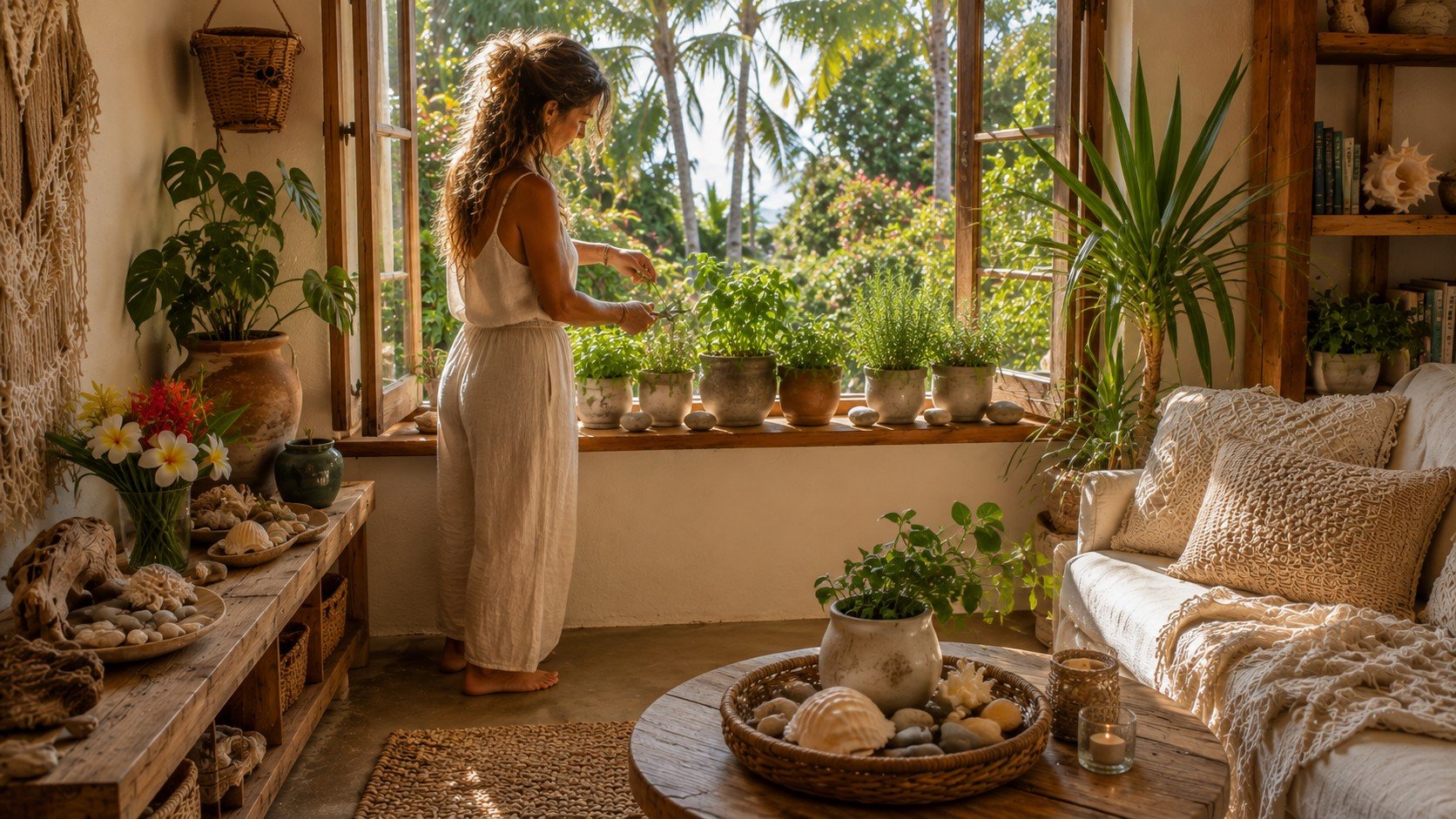
Our homes can help us maintain a relationship with nature. Grow herbs on a windowsill. Keep houseplants. Display shells or interesting stones you've found. Choose wood, bamboo, cotton, linen, clay, woven fibers, and other natural materials when they appeal to you. Open the windows and let fresh air move through the house. Bring home flowers.
These aren't simply decorating choices. Natural elements can remind us that our homes exist within the Earth rather than apart from it.
Pay Attention to Where Your Food Comes From
Food may be one of our most intimate relationships with the Earth, yet modern packaging makes it easy to forget that connection. A strawberry began as a flower. A potato grew underground. An avocado hung from a tree. Herbs emerged from soil and sunlight.
Before eating, occasionally pause and really look at your food. Consider how many elements came together to create it: soil, water, sunlight, pollinators, farmers, transportation, and time.
Appreciation changes an ordinary meal into a moment of connection.
Remember the Gift of Water
Water is another everyday miracle we've made wonderfully convenient. Turn a handle and clean water appears. Because it is so readily available, it's easy to stop noticing it.
The next time you drink a glass of water, shower, water a plant, or stand outside in the rain, take a moment to appreciate water itself.
The water moving through your body participates in the same planetary water cycle as oceans, rivers, clouds, rain, plants, and animals.
That is an extraordinary thing to remember while standing at the kitchen sink.
Let the Outdoors Become Part of Ordinary Life
Nature connection doesn't have to mean hiking through a remote forest.
Sit outside while drinking something in the morning. Eat lunch outdoors. Walk around the block. Tend a garden. Put your bare feet in the grass. Visit a local park. Stop for a few minutes beside the ocean, river, lake, or trees on your way home.
Instead of thinking of nature as somewhere we occasionally go, we can weave it back into ordinary life. Five attentive minutes outside can sometimes create more connection than an hour outdoors spent staring at a phone.
Notice the Moon Again
For thousands of years, humans watched the Moon as a natural marker of time. Most of us no longer need it to track our calendars, but we can still enjoy knowing where we are in its cycle.
Look for it when you step outside. Notice when it is barely visible, half illuminated, brilliantly full, or absent from the evening sky.
There doesn't need to be a ritual or spiritual meaning attached to it. Sometimes awareness itself is enough.
Consume With Greater Awareness
Living in relationship with the Earth also means remembering that the things we buy come from somewhere. Every object requires materials, energy, transportation, and eventually some form of disposal.
This doesn't mean we need to feel guilty every time we buy something. It simply invites consciousness into the process.
Do I really want this? Will I use it? Can I repair something I already own? Could I buy less but choose something I genuinely value?
Conscious consumption isn't about perfection. It's about remembering the larger relationship behind our choices.
Create Your Own Relationship With the Earth
Earth-connected living doesn't need to look a certain way. You don't need to become a gardener, hug trees, live off-grid, or know the names of every plant in your neighborhood.
Find the connections that genuinely bring you pleasure.
Maybe you love watching sunsets. Maybe you feel happiest near water. Maybe you enjoy growing vegetables, photographing flowers, walking barefoot on the beach, listening to rain, watching birds, or simply opening your bedroom window in the morning.
Follow what makes you feel more connected. Over time, these small experiences begin changing something important. The Earth becomes less like the backdrop to your life and more like a presence within it.
Living on Earth—and With Her
Earth wisdom for everyday living isn't another set of rules to follow. It's a relationship to remember.
We can enjoy technology, live in modern homes, drive cars, work indoors, order things online, and participate fully in contemporary life while still remembering the natural world that makes all of it possible.
Notice the Sun. Appreciate the water. Know a few of your neighboring trees. Feel the weather. Watch something grow. Look at the Moon. Spend time outside without needing to accomplish anything.
The Earth is already part of every day we live. Perhaps Earth wisdom begins simply by allowing ourselves to notice her again