Rediscovering Our Relationship with the Earth
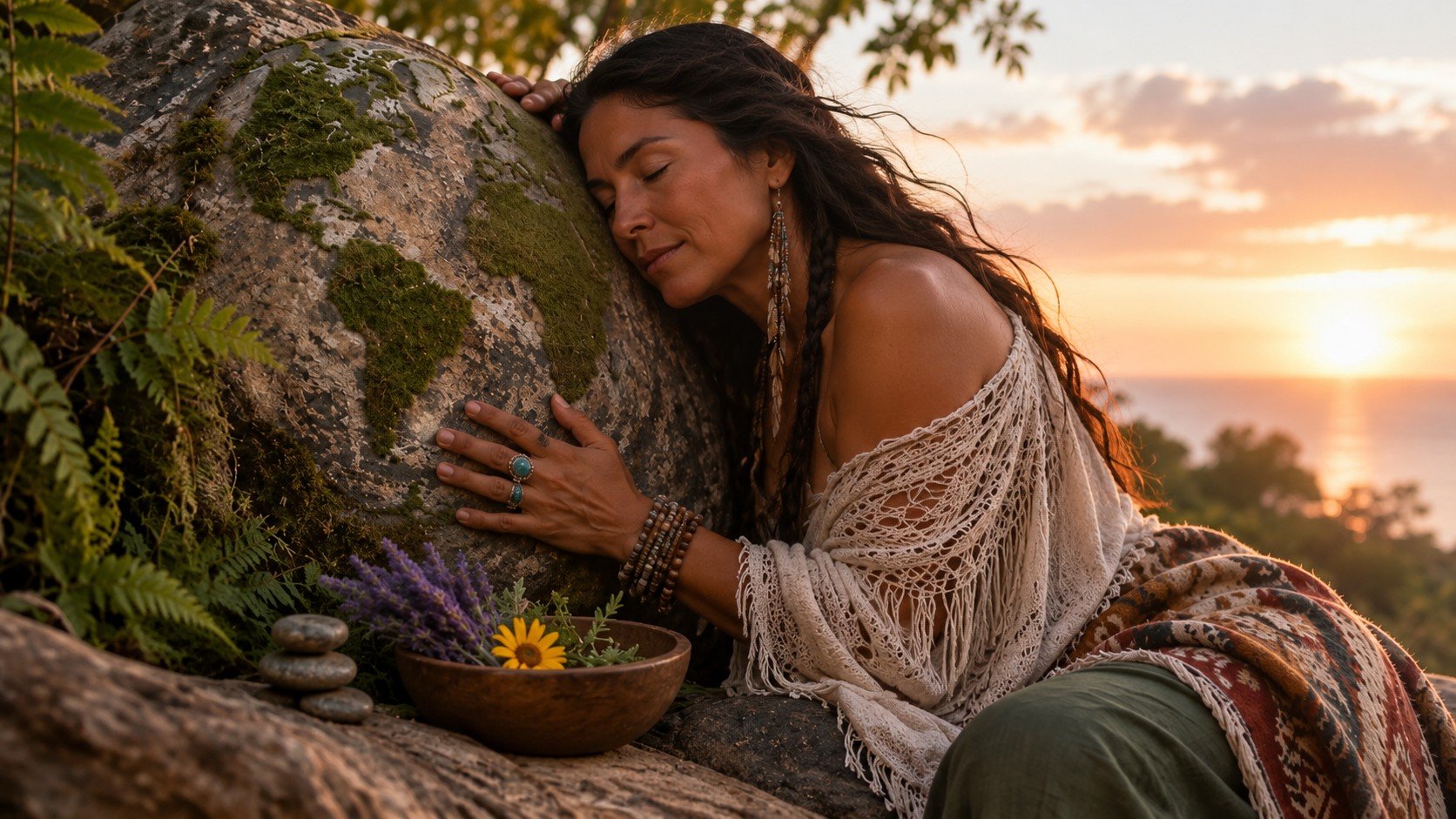
For most of human history, we lived in intimate relationship with the Earth. We watched the sky, followed the seasons, gathered food from the land, listened to the weather, and understood that our lives were woven into the rhythms of nature.
Today, many of us live very differently.
We wake to alarms instead of sunlight. We spend our days surrounded by walls, screens, schedules, traffic, and artificial light. Food arrives packaged on shelves. Water comes from a faucet. We can go through an entire day without putting our bare feet on the ground or noticing what phase the Moon is in.
And yet, beneath all of our modern conveniences, we are still beings of the Earth.
Perhaps part of our spiritual evolution isn't about transcending the physical world at all. Perhaps it is about remembering how deeply we belong to it.
The Earth Is More Than Our Environment
We often speak about nature as though it exists somewhere "out there." We go into nature. We take a trip to the mountains. We spend a day at the beach. But we aren't separate from nature.
The minerals within the Earth are also within our bodies. The water moving through rivers and oceans is the same water that makes up much of our physical form. We breathe because plants and trees breathe. We eat because soil, sunlight, water, microorganisms, plants, animals, and countless natural cycles work together to sustain life.
Nature isn't simply the scenery surrounding our human experience.
We are nature.
Remembering this changes the relationship. Instead of seeing the Earth primarily as something that provides resources for us, we can begin relating to her as part of a living system to which we also belong.
Reconnecting with the Intelligence of Nature
There is an intelligence within the natural world that doesn't require our management.
A seed knows how to become a tree. A flower knows when to open. Birds know when to migrate. The ocean responds to the gravitational pull of the Moon. Forest ecosystems continually communicate, adapt, regenerate, and reorganize themselves.
Nature doesn't rush, yet it is constantly changing. There is something deeply grounding about remembering this.
We live in a culture that encourages us to push, control, predict, optimize, and hurry. Nature reminds us that life also moves through cycles of expansion and contraction, activity and rest, blooming and releasing.
Not every season is meant for producing. Not every season is meant for beginnings. Sometimes the most aligned thing we can do is listen to the season we're actually in.
Bringing Earth Connection Back into Everyday Life
Rediscovering our relationship with the Earth doesn't require moving into the wilderness or completely changing our lifestyle. It can begin with attention.
Walk outside in the morning and feel the temperature of the air before looking at your phone. Notice the birds living around your home. Learn the names of a few local plants. Watch a sunset without photographing it. Sit beneath a tree. Grow herbs on a windowsill. Put your hands in the soil. Walk barefoot on grass or sand when it's safe to do so.
Eat something fresh and pause long enough to appreciate where it came from. Notice the Moon. Listen to rain. Feel the wind.
These may seem like small things, but small moments of awareness begin rebuilding a relationship that many of us have forgotten. The Earth stops becoming background scenery and becomes part of our daily experience again.
A Different Kind of New Earth
There is a lot of conversation in spiritual communities about the New Earth and humanity moving into higher levels of consciousness. But perhaps creating a New Earth also means developing a new relationship with the Earth we already have.
Higher consciousness isn't only about what we understand spiritually. It is reflected in how we live.
As our awareness expands, we may naturally begin questioning ways of living based on endless consumption, disconnection, and domination. We may feel drawn toward greater simplicity, sustainability, appreciation, cooperation, and respect for the living world.
This doesn't have to come from fear or guilt. It can come from love. When you feel connected to something, caring for it becomes much more natural.
The Earth Can Bring Us Back to Ourselves
There is also something wonderfully simple about being in nature. The ocean doesn't care about your productivity. A tree isn't impressed by your résumé. The mountains don't need you to prove your worth. Nature invites you to simply be.
And perhaps that is one reason so many people instinctively turn toward beaches, forests, mountains, gardens, rivers, and open skies when life becomes overwhelming. Away from the constant noise of human expectations, something inside us begins to settle.
We remember ourselves.
As humanity continues navigating enormous technological, cultural, and spiritual change, our relationship with the Earth may become more important, not less.
We don't have to choose between evolution and nature, technology and spirituality, progress and the Earth. We can move forward while remembering where we came from. We can create new ways of living while listening to ancient rhythms. And we can begin to recognize that our relationship with the Earth was never truly lost. We simply became distracted.
The connection has been here all along, waiting beneath our feet.